First-degree AV block
Every P wave conducts to a QRS, but conduction through the AV node is slow — so the PR interval is long (over 0.20 seconds) and constant. Nothing is dropped; it's often asymptomatic.
Second-degree AV block — the two types
- Mobitz I (Wenckebach): the PR interval gets progressively longer beat after beat until one P wave fails to conduct and a QRS is dropped — then the cycle repeats.
- Mobitz II: the PR interval stays constant, but every so often a P wave suddenly fails and a QRS drops without warning. It's the more concerning type because it can progress to complete block.
Third-degree (complete) AV block
No signals get through the AV node, so the atria and ventricles beat independently — the P waves and QRS complexes have no consistent relationship. An escape rhythm keeps the ventricles going, often slowly.
Let the PR interval guide you
Blocks click once you watch the PR interval: long-and-constant (first), lengthening-then-dropping (Wenckebach), constant-then-dropping (Mobitz II), or unrelated entirely (third). Coloring the PR interval makes the pattern jump out — see the waves & intervals guide.
Practice blocks on a live strip
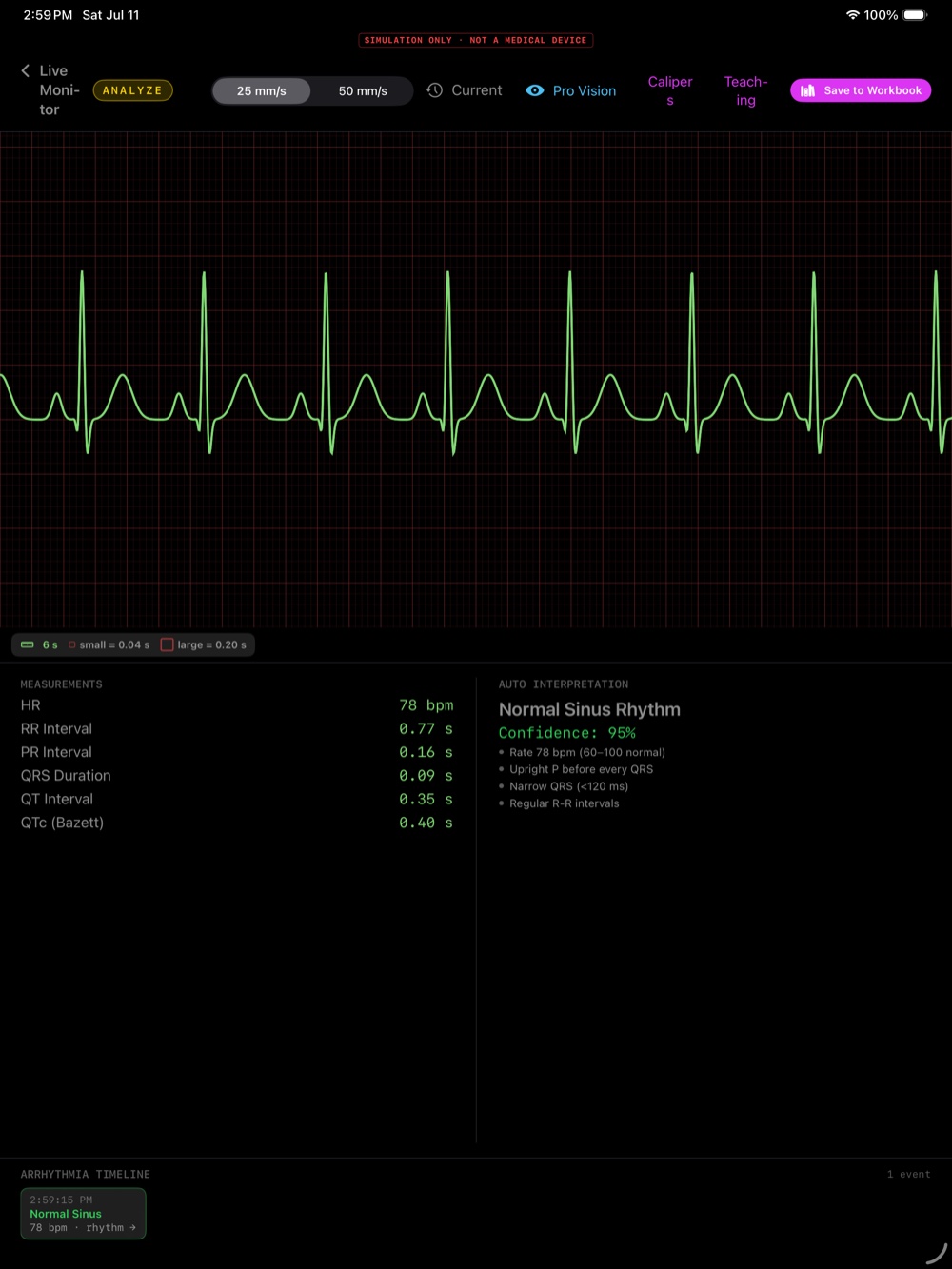
VitalSim Rhythm's conduction lessons let you load each block, freeze it, and measure the PR interval with calipers — and Pro Vision colors the PR so the pattern is obvious.

FAQ
What is the difference between first, second, and third degree heart block?
First degree: all beats conduct but slowly (long PR). Second degree: some beats are dropped. Third degree: none conduct, and the atria and ventricles beat independently.
What's the difference between Wenckebach and Mobitz II?
In Wenckebach (Mobitz I) the PR interval lengthens progressively until a QRS drops; in Mobitz II the PR stays constant and a QRS drops suddenly. Mobitz II is the more concerning of the two.
How do you recognize third-degree heart block?
The P waves and QRS complexes have no consistent relationship — they march at their own independent rates (AV dissociation).