Protein on a GLP-1: how much, and how to actually hit it
When a GLP-1 quiets your appetite, protein is the nutrient with the least room to fail — it's how you ask your body to burn fat and keep muscle. Published reviews and clinical guidance commonly cite targets in the range of roughly 1.2–1.6 grams per kilogram of body weight per day, spread across meals, paired with resistance training two to three times a week. Your own number should come from your clinician or dietitian. The practical skill is hitting it on a small appetite: protein first, smaller and more often, and repeatable go-to meals.
Why muscle is quietly at stake
Lose weight without protecting muscle and a meaningful share of what you lose can be lean mass, not fat — an outcome researchers have flagged specifically in the context of rapid, medication-assisted weight loss. Muscle is your metabolic engine, your strength for daily life, and much harder to rebuild than to keep. The encouraging part: studies and professional guidance consistently point to the same two protective habits — adequate protein and resistance exercise — and both are fully in your hands.
How much protein, exactly?
You'll see slightly different numbers from different sources, which is itself worth knowing:
- Reviews of GLP-1 therapy commonly recommend protein intakes above 1.2 g per kilogram per day, evenly distributed across meals, alongside structured resistance training.
- Clinical and dietetic resources frame targets a little differently — some use slightly lower or higher ranges, and some go higher for older adults or heavy training.
- And there's a practical wrinkle: whether to base the math on your current weight or a target weight is itself an individual question.
That spread is exactly why your number should come from your clinician or a registered dietitian, who can account for your kidneys, your medications, your age, and your goals. What the sources agree on: on a GLP-1, more deliberate protein than before, spread through the day, paired with strength work.
Hitting your number on a quiet appetite
Knowing your target is easy. Eating it when nothing sounds appealing is the actual skill:
- Protein first. Eat the protein on the plate before the rest. If you're full three bites early, make them carb bites, not chicken bites.
- Smaller, more often. Three big meals may be gone for now. Four to five small protein anchors — eggs, Greek yogurt, cottage cheese, a shake, tuna, edamame — can carry the day.
- Make repeats a feature. The same high-protein breakfast every day isn't boring, it's infrastructure. Decide once, repeat daily.
- Liquid counts. On rough-stomach days, a protein shake or milk-based drink can rescue a day that solid food won't.
- Track goal-days, not perfection. "I hit my protein five days this week" is a sturdier measure than any single day's grams.
The other half: resistance training
Federal physical-activity guidelines recommend muscle-strengthening activity at least two days a week for adults — and in the GLP-1 context, research keeps finding that protein and resistance training protect lean mass better together than either alone. Two or three short sessions a week — bodyweight, bands, or weights — is the dose that pairs with your protein target. If you're new to strength work, that's another great question for your care team.
Track it without making it a job
You don't need to become a macro accountant forever. You need to know two things most days: roughly how much protein you ate, and whether the week included strength work. A food log with a protein bar you can glance at — plus a weekly count of goal-days — covers it. (Here's where protein fits in the full tracking picture, and how it plays out across the first 100 days.)
How GLP 100 helps
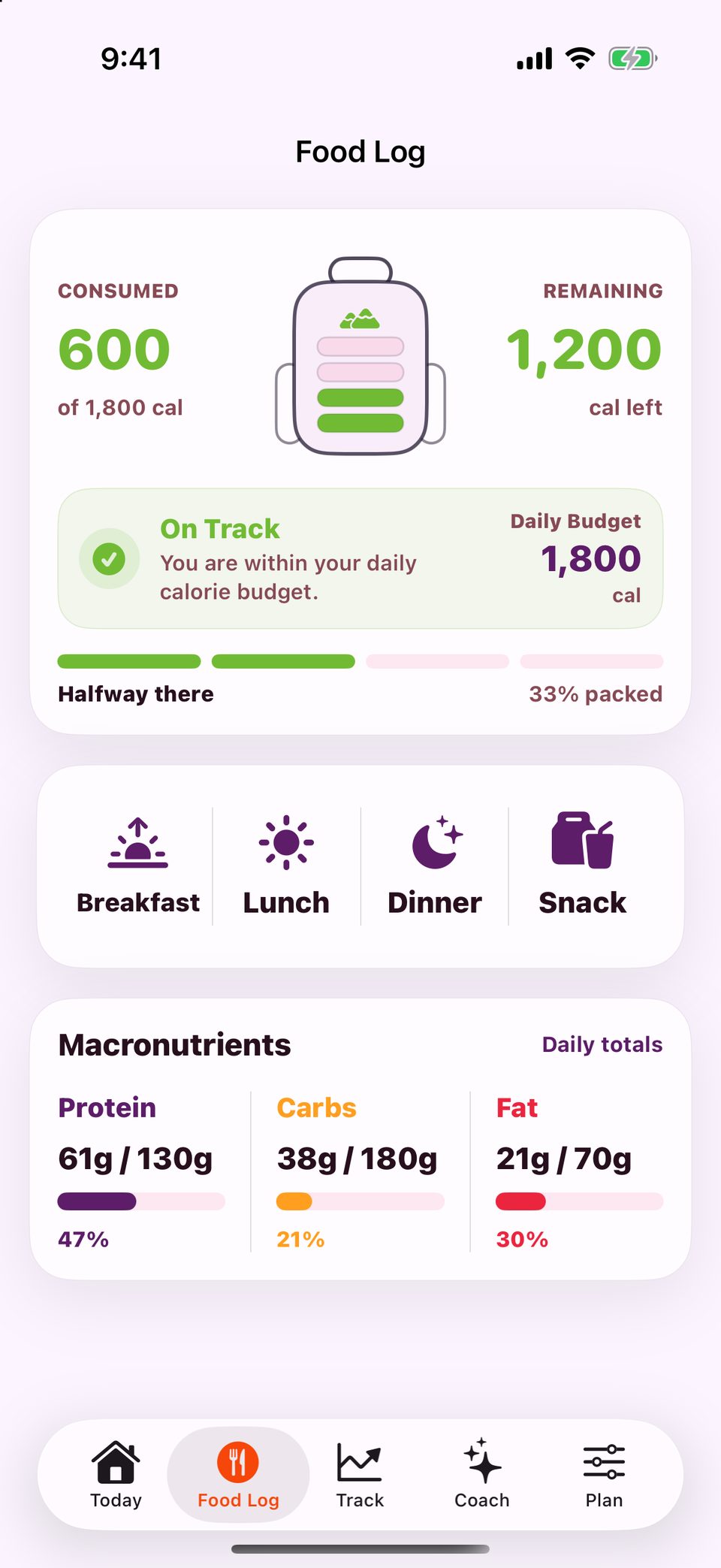
GLP 100 gives protein a front-row seat: a daily goal with a progress bar, barcode scanning and food search, one-tap repeats of your go-to meals for low-appetite days, and a weekly "protein goal days" count in your coach brief. All of it stays on your iPhone. Free to start.