
What to track on a GLP-1 — and what to skip
Eight things earn their place: dose day, injection site, a daily symptom check-in, water, protein, a weekly weigh-in, movement, and the questions you want to ask at your next appointment. On overwhelmed weeks, cut to four: dose, symptoms, water, protein. Skip daily weigh-in drama and calorie perfectionism — the goal is a pattern your prescriber can use, not a second job.
Why tracking matters more on a GLP-1 than on a diet
On a typical diet, tracking mostly serves motivation. On a GLP-1, it also serves medical decision-making. Your prescriber adjusts your dose based largely on what you report: how you tolerated the last step, whether side effects are settling, how your appetite and weight are responding. "Fine, I guess?" gives them nothing to work with. Ten seconds a day of honest notes gives them a pattern — and patterns are what good dose decisions are made of.
The eight things worth tracking
- Dose day and time. The foundation. A weekly medication only works as designed when it's actually weekly, and if you ever need to discuss a missed or delayed dose, the exact dates matter.
- Injection site. Rotating sites is standard guidance for subcutaneous medications, and the only way to rotate reliably is to know where you injected last. One word — "left thigh" — is enough. (Here's a rotation system that runs itself.)
- A daily symptom check-in. Nausea, energy, digestion — scored quickly, the same way each day. This is the log your prescriber will actually read, and it's how you'll see that a rough patch after a dose step is following the usual arc instead of getting worse. (See the week-by-week side-effect timeline.)
- Water. Appetite suppression quiets thirst cues for many people, and hydration is one of the first things clinicians check when side effects flare. A simple daily count beats good intentions.
- Protein. What's quietly at stake in GLP-1 weight loss is muscle. When you eat less, protein has to work harder — most guidance puts a number on it, and hitting that number is a daily practice. (How much protein, exactly?)
- Weight — weekly, not daily. One consistent weigh-in a week (same day, same conditions) draws a truer line than seven anxious ones. What you want is the trend across weeks.
- Movement — especially strength work. You don't need a training log worthy of an athlete; you need to know whether the week included the resistance work that helps protect muscle.
- Questions for your next appointment. The best follow-ups are the ones where you don't say "I forgot what I wanted to ask." Capture questions the moment they occur.
The light version, for weeks when life happens
Some weeks you'll have bandwidth for all eight. Some weeks you won't — sick kids, work crunch, travel. For those weeks, four things keep the thread: dose day and site, the symptom check-in, water, protein. Everything else can pause without losing the plot. A four-item week beats an abandoned system every time.
Paper journal or app?
Plenty of people start with a paper GLP-1 journal — there's a whole shelf of them — and paper has real virtues: it's private by default and needs no battery. Its weaknesses show up at exactly the wrong moments: it can't remind you of shot day, it can't draw your weight trend, it can't add up protein, and it's rarely in your pocket when a symptom is worth noting. If you go digital, hold the app to paper's privacy standard: no account required, and your entries stored on your device — not someone's server.
What not to track
Tracking fails when it becomes a second job. Two habits to skip:
- Daily-weigh drama. Day-to-day scale movement is mostly water and noise. If a daily number wrecks your morning, you're paying attention tax on bad data. Weekly is enough.
- Calorie perfectionism. Logging every gram forever isn't the goal — seeing your pattern is. A "close enough" food log you keep beats a perfect one you quit.
Make your appointments better
Before each follow-up, pull three numbers from your log: your weight change since the last visit, roughly how many days you hit your protein goal, and which symptoms showed up after your last dose change (and whether they settled). Then your saved questions. That's a two-minute prep that changes the quality of a fifteen-minute visit — and it's exactly the pattern your prescriber needs for the next dose decision. (For the bigger arc, see the full first-100-days roadmap.)
How GLP 100 helps
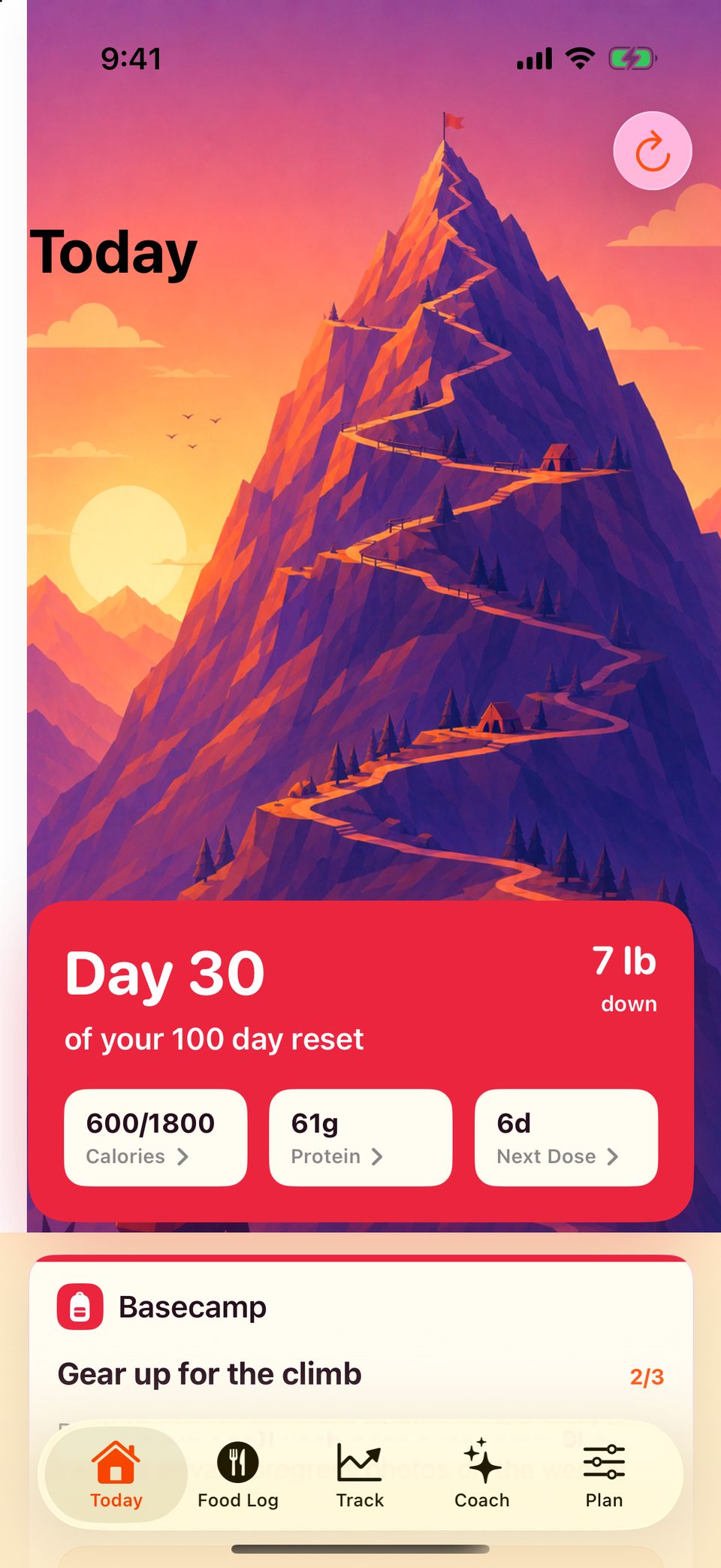
GLP 100 is built around exactly this list: a 60-second daily check-in for symptoms and hydration, one-tap dose and site logging, protein and food tracking with barcode scan and repeatable meals, a weekly weight trend with milestones — and a 100-day structure that gives the whole thing a finish line. It's free to start, with no account, and everything you log stays on your iPhone.