Antisepsis is (almost) everything
Most contamination comes from skin flora, so the prep is the whole game. A common approach is to cleanse with 70% isopropyl alcohol and then apply a chlorhexidine-based antiseptic (or, where policy specifies — for example with chlorhexidine sensitivity or in neonates — an iodine-based one), scrubbing for the time your product specifies and — critically — letting it dry completely before you draw. Once the site is prepped, don't re-palpate it with an unclean finger. Follow the antiseptic type, concentration, and contact time in your facility's policy.
Cultures first, and to volume
When other tests are ordered too, blood cultures are collected first so nothing contaminates the sterile bottles. Disinfect the tops of the culture bottles, and fill each bottle to its intended volume — under-filling and over-filling both affect results. Adult culture sets involve a specific total volume; your facility sets the exact amount and how many sets.
Bottles, order, and documentation
A set usually includes an aerobic and an anaerobic bottle; your facility's policy specifies which to inoculate first and how. Document the site, time, and set as your policy requires. If a second set is drawn from a different site, keep them clearly labeled.
Cutting contamination further
Facilities reduce contamination with careful technique, dedicated venipuncture (rather than drawing from an existing line when avoidable), and, increasingly, initial-specimen-diversion devices that discard the first small portion of blood that may carry skin organisms. Use the method your facility has adopted.
Do it in the app
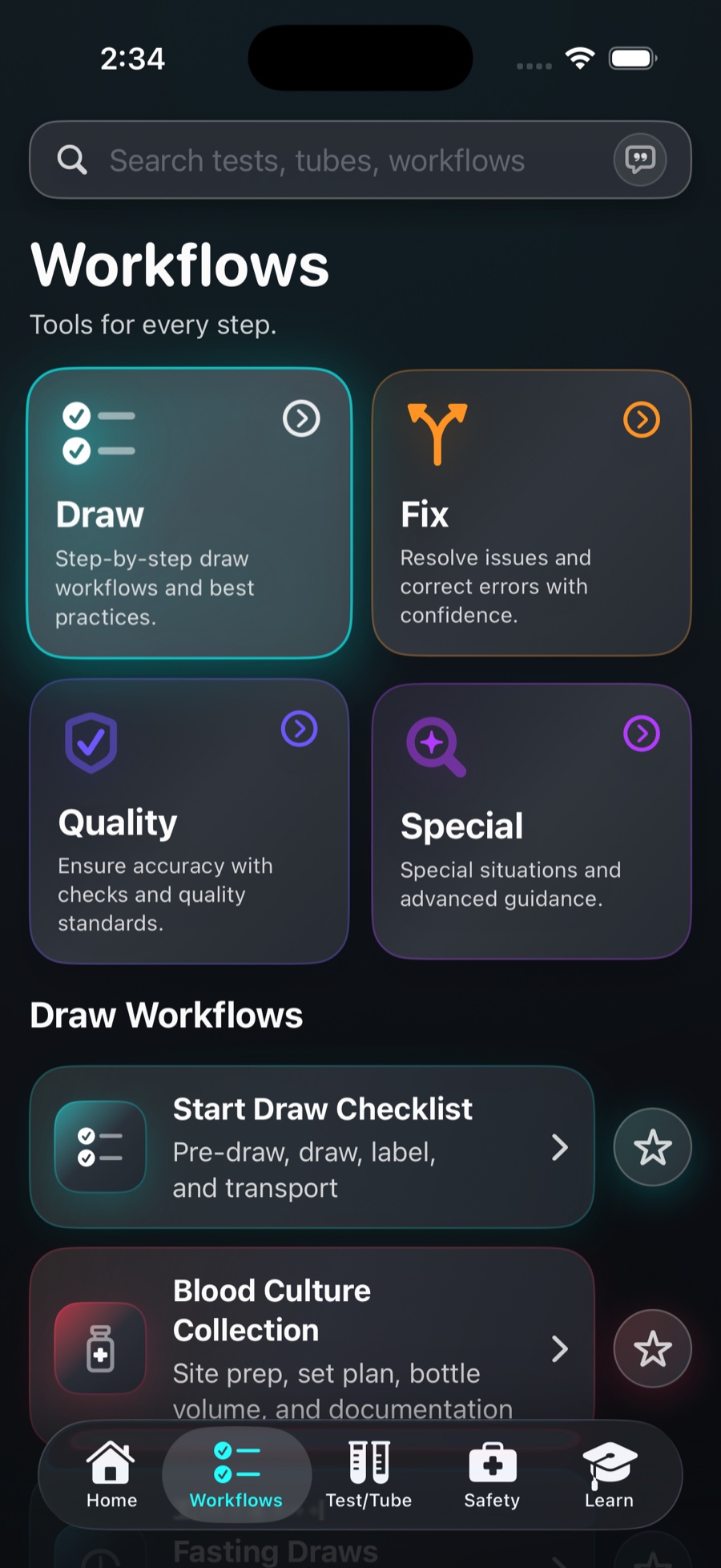
Phlebotomy Toolkit's Blood Culture Collection workflow gives you checklist-style reminders — site prep, set plan, bottle volume awareness, and documentation prompts — so nothing gets skipped. It reflects general good practice and points back to your facility's policy.

$9.99 · one-time · no subscription · iPhone & iPad