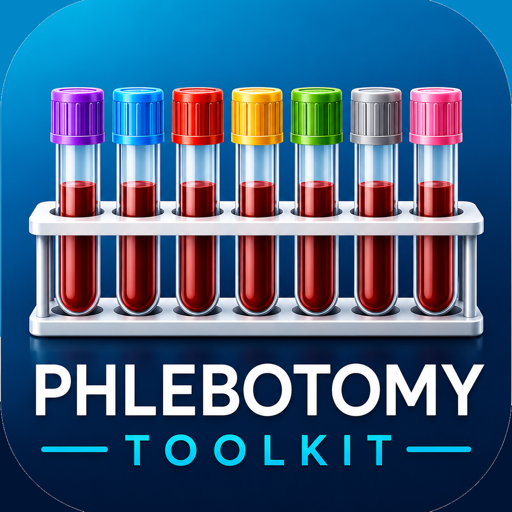
Color → additive → what it's for
- Light blue — sodium citrate — coagulation studies (PT/INR, aPTT). Fill to the line; the blood-to-additive ratio matters.
- Red — no additive (or a clot activator in plastic tubes) — serum for many chemistry, serology, and blood-bank tests.
- Gold / SST ("tiger top") — clot activator + gel separator — serum chemistry; the gel separates serum from cells after spinning.
- Green — heparin (lithium or sodium) — plasma chemistry, stat chemistries, and ammonia.
- Lavender / purple — EDTA — CBC and most hematology; also HbA1c.
- Gray — sodium fluoride + potassium oxalate — glucose and lactate (fluoride preserves glucose).
- Yellow — two kinds: SPS for blood cultures, or ACD for DNA/HLA testing.
Exact tube choices, brands, and any facility-specific rules live in your laboratory's test directory.
Which tube for common tests
- CBC → lavender (EDTA).
- CMP / BMP → gold/SST (serum) — or green (lithium heparin) at some labs.
- PT/INR → light blue (sodium citrate).
- HbA1c → lavender (EDTA) at many labs.
- Glucose (preserved) → gray (fluoride/oxalate).
When a test could go in more than one tube, your lab's directory decides — check it.
Handling & inversions
Additive tubes need gentle inversions right after they fill so the additive mixes and the specimen doesn't clot — but the number of inversions varies by tube type and manufacturer. Follow each tube's instructions for use and your facility's guidance; don't shake.
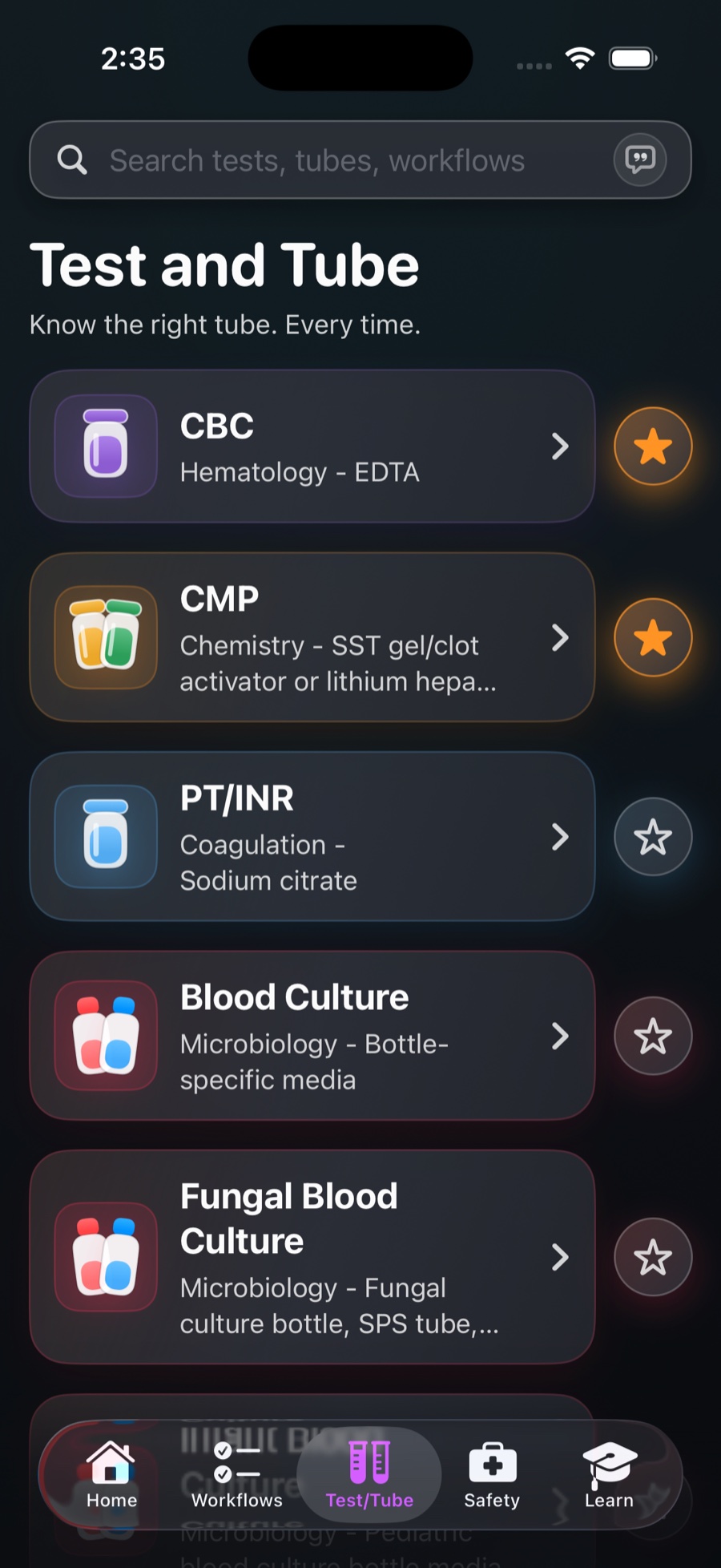
See every tube in the app
Phlebotomy Toolkit's Test & Tube reference shows each test's tube color, additive, handling, inversions, and common rejection risks — searchable and offline.

$9.99 · one-time · no subscription · iPhone & iPad