Where bubbling shows up
Bubbling appears in the water-seal (air-leak) chamber as air passes through the water. Don't confuse it with tidaling, the smooth rise-and-fall of the same column with breathing — bubbling is air actually breaking through. Many units add an air-leak meter, a row of numbered columns, right at the water seal.
Intermittent vs continuous
- Intermittent bubbling — comes and goes, often at the end of a breath or when the patient coughs. Soon after insertion for a pneumothorax, this is commonly expected as trapped air evacuates.
- Continuous bubbling — steady, through the whole breathing cycle. This suggests an ongoing air leak: a larger lung or airway injury, or a leak somewhere in the tubing or connections. New, vigorous, continuous bubbling in a tube that had settled is a change worth reporting.
A useful mental check: was this drain just placed for a fresh pneumothorax (some bubbling expected), or has it been quiet for a day and suddenly started (think new leak)?
Grading a leak — the columns 1 to 5
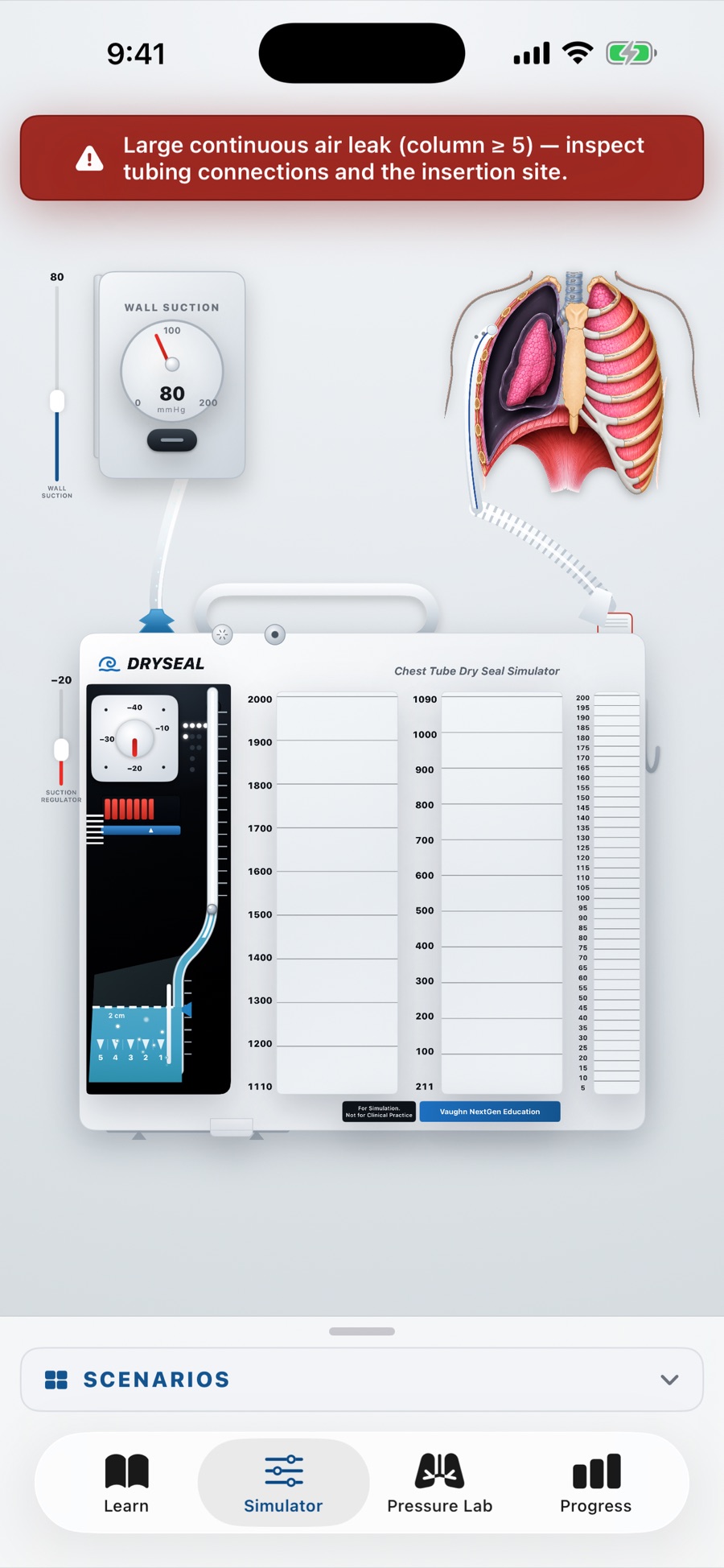
Many air-leak meters are numbered, low (1) to high (5). The higher the column the bubbles reach, the bigger the leak. Grading the same way each time lets you track a leak over hours: is it climbing, holding, or settling? Chest Tube Simulator shows graded bubbling across the columns and raises a large-leak alert when it reaches the top.
Finding where a leak is coming from
The general approach is to work from the patient toward the unit — check the insertion-site dressing and the connections along the tubing. Some units and policies use brief, momentary clamping to localize a leak, but routine or prolonged clamping is discouraged because it can let pressure build up in the chest. Only clamp if it's ordered and permitted by your facility, and never leave a tube with an active air leak clamped. See Recognizing danger.
See graded bubbling in the app
You can dial an air leak up and down in Chest Tube Simulator and watch it bubble through the columns, switch between intermittent and continuous patterns, and see the large-leak alert fire — the picture a diagram can't give you.
 $49.99 · one-time purchase · iPhone & iPad
FAQ
-
Is bubbling in the water-seal chamber normal?
Intermittent bubbling with breathing or coughing can be expected, especially just after a chest tube is placed for a pneumothorax. Continuous bubbling suggests an air leak. Read it in context and follow your facility's policy.
-
What do the air-leak columns 1–5 mean?
They grade the size of a leak: the higher the numbered column the bubbles reach, the larger the leak. Grading consistently helps you track whether it's improving.
-
Continuous vs intermittent — what's the difference?
Intermittent bubbling comes and goes with the breath or a cough; continuous bubbling runs through the whole cycle and points to an ongoing leak.