Two ways suction is controlled
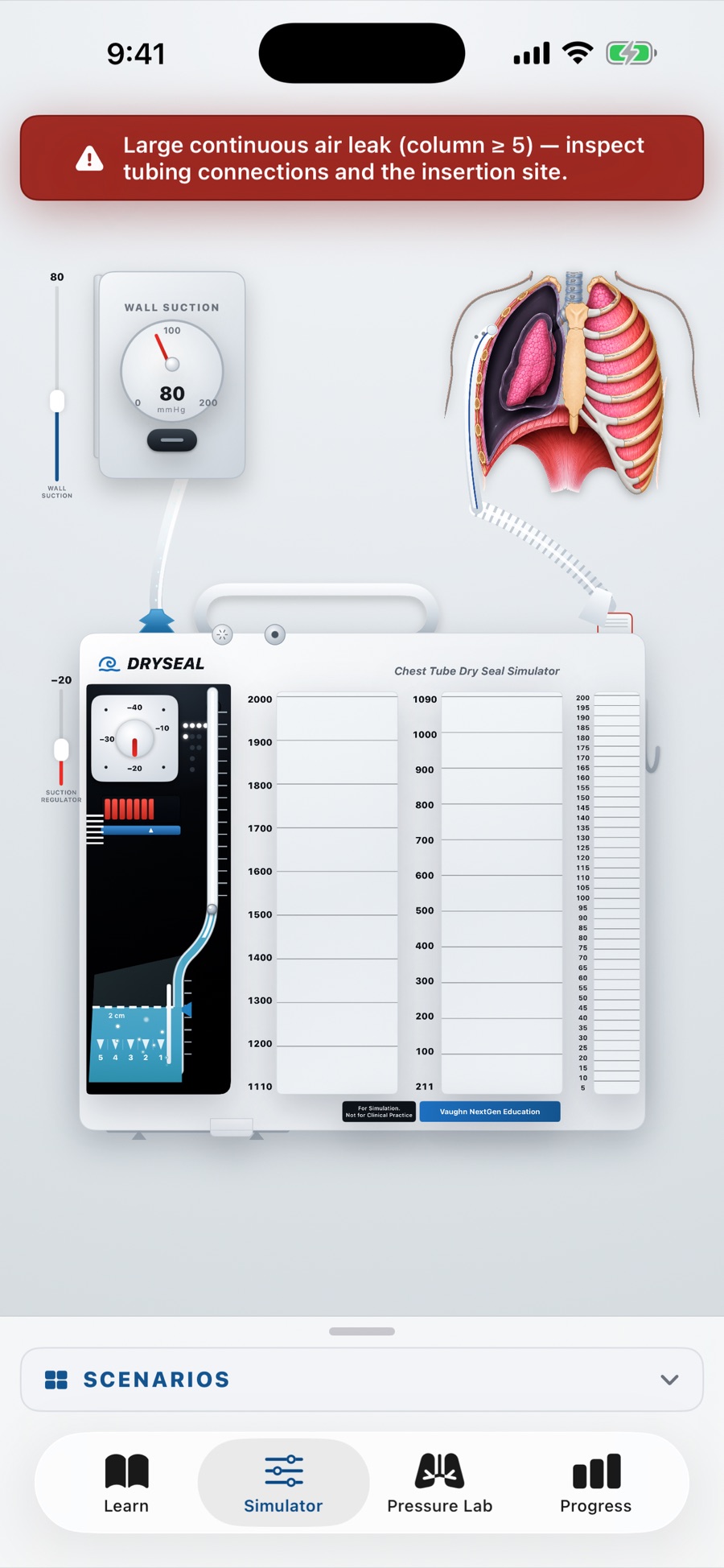
- Dry suction (the modern unit) — The suction is set with a regulator dial on the unit (for example, −20 cmH₂O). The wall suction is then turned up until an indicator on the unit shows it's getting enough — often in the range of about 80 mmHg of wall vacuum (some units reach the target with less), adjusted to the device's own indicator (a float or bellows) rather than to a number on the wall gauge. The dial, not the wall, sets the delivered suction.
- Wet suction (the water column) — Older units set suction by the height of water in a suction-control chamber (filled to the −20 cm mark). The wall suction is turned up only until there's gentle, continuous bubbling in that chamber; turning it up further just bubbles harder — it doesn't increase the suction the patient gets.
What −20 cmH₂O actually means
−20 cmH₂O is the amount of negative pressure applied to help evacuate air and fluid; it's a long-standing convention rather than a hard rule, and orders vary. "To water seal" (or "to gravity") means no suction at all — the water seal's one-way valve does the work. Always go by the specific order for your patient.
Reading the suction monitor
Dry-suction units show a monitor (a bellows or float) that confirms suction is actually reaching the unit. If the monitor isn't showing, the unit may not be getting enough wall vacuum, a connection may be loose, or the tubing may be kinked — check the line from the unit back to the wall. A drain can still work "to water seal" without wall suction.
Set the suction yourself in the app
Chest Tube Simulator has the wall-suction regulator, the dry-suction dial, and the suction monitor all on one screen, so you can see how they relate — turn the dial, adjust the wall source, and watch the monitor respond.
 $49.99 · one-time purchase · iPhone & iPad
FAQ
-
Why is chest tube suction set to −20 cmH₂O?
It's the conventional starting level of negative pressure to help drainage; typical orders range from −10 to −40 cmH₂O. It's convention more than a strict rule — follow the specific order.
-
How much wall suction should I use?
Enough for the unit's own indicator to register — on many dry-suction units that's around 80 mmHg (sometimes less), adjusted to the device's float or bellows, not to a number on the wall. On wet units, just enough for gentle continuous bubbling.
-
What does "to water seal" mean?
No suction is applied; the water seal's one-way valve lets air out and keeps it from coming back. It's a common order, especially as a lung re-expands.