Why the water seal moves
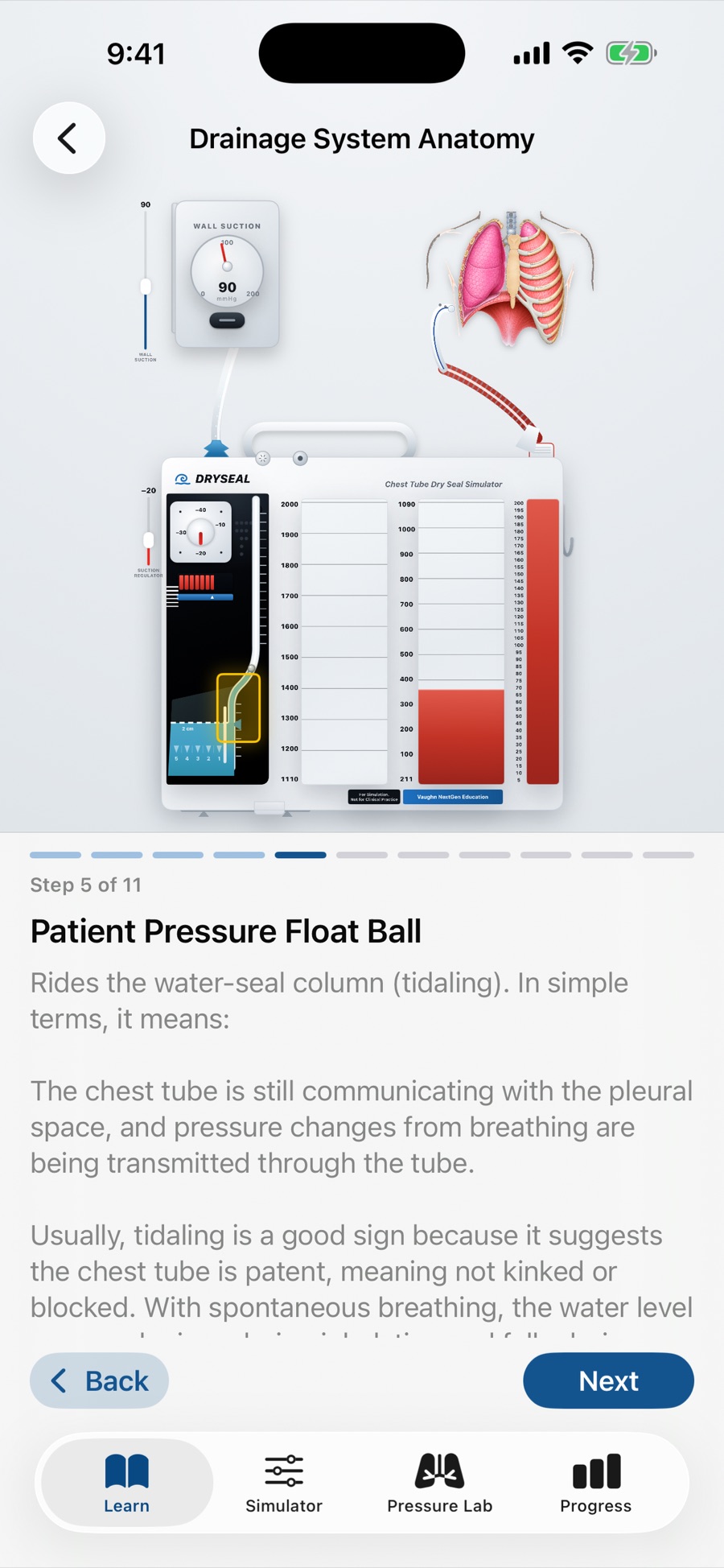
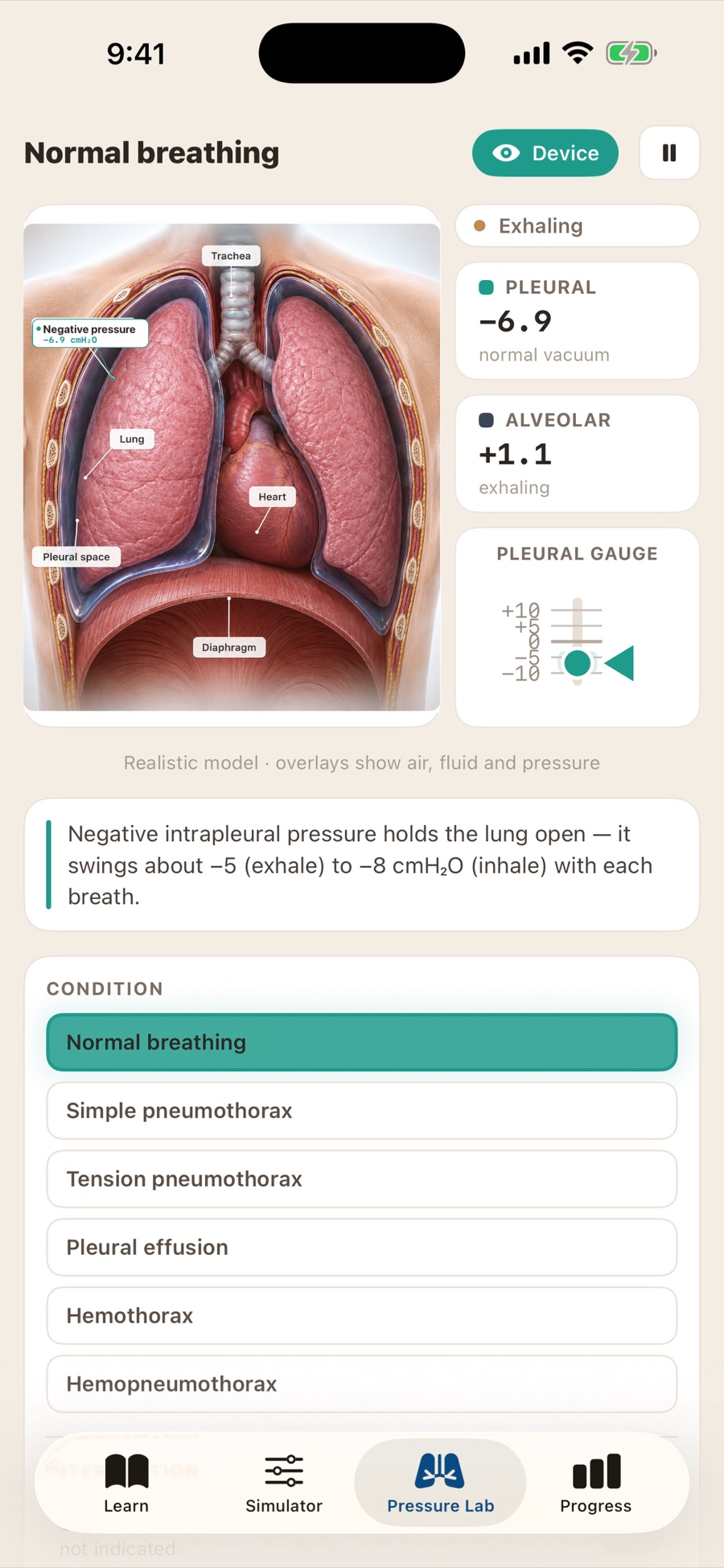
The pleural space normally sits at a negative pressure, and that pressure changes as the chest expands and relaxes. Those swings are transmitted up the tube to the water-seal column, so the water rises and falls with the breathing cycle. That's tidaling — a small, breathing-linked oscillation, not vigorous bubbling.
Normal breathing vs a ventilator
Direction depends on how the patient is breathing. Breathing on their own, the water rises with inspiration (the chest pulls harder to a more negative pressure) and falls with expiration. On positive-pressure ventilation the machine pushes air in, so the pattern flips. Either way, some tidaling is the reassuring finding.
When tidaling stops
A loss of tidaling means something changed — and it's not always bad. The two big reasons:
- The lung re-expanded. If the pleural space has closed down, there's less pressure to transmit, and tidaling can fade. In the right patient this is progress.
- Something is blocking the tube. A kink, a clot, a dependent loop of tubing, or a clamp can stop the swing. Suction can also damp tidaling, so it's often best judged with the patient briefly off suction, if your policy allows.
When tidaling disappears, the classic approach is to look from the patient toward the unit — check the dressing and the tube nearest the patient first, then work back along the tubing to the drain, looking for kinks, dependent loops, or clots. What you do next depends on the patient and your facility's policy and orders.
Loss of tidaling with a breathless patient
Losing tidaling in a patient who is becoming short of breath is a different, more urgent picture — it can signal that air or pressure is building in the chest with nowhere to go. That's a recognize-and-escalate situation: get help and follow your facility's protocol. Chest Tube Simulator lets you practice spotting this pattern; it does not replace your clinical judgment or your provider's orders. See Recognizing danger.
Watch tidaling in the app
Tidaling is almost impossible to picture from a still diagram. In Chest Tube Simulator the water seal actually rises and falls, and you can make it stop — clamp the tube, re-expand the lung — and watch what changes.
 $49.99 · one-time purchase · iPhone & iPad
FAQ
-
Is tidaling good or bad?
Tidaling usually means the chest tube is patent (open and working). It's generally a reassuring sign, read together with the rest of the picture.
-
What does loss of tidaling mean?
Either the lung has re-expanded or the tube is obstructed (kink, clot, dependent loop) — or suction is damping it. Assess from the patient toward the unit and follow your facility's policy.
-
What's the difference between tidaling and bubbling?
Tidaling is a smooth rise-and-fall of the water with breathing. Bubbling is air passing through the water seal — that points to an air leak. See Air leaks & bubbling.